The Laird’s Sacred Temptation (Preview)

Chapter One
1665, Glen Tarbert
The road toward the Movern coast wound like a pale thread through the hills, its turns cut into rock and peat, slick from the morning rain. The sound of hooves pressed steady against the sodden earth, a rhythm that might have been soothing if not for the weight in Lorna MacAlpin’s chest. She sat sidesaddle upon her mare, her cloak drawn tight, eyes on the mist that clung low to the glen ahead. Every breath tasted faintly of sea salt and pine resin, the air sharp enough to sting.
The hills blurred into a gray silence that left her alone with her thoughts. Each breath of cold air seemed to echo the same question she’d been afraid to ask: what did obedience mean, if it cost her everything? Her hands, gloved and steady on the reins, betrayed nothing of the tremor beneath. The road turned sharply, jolting her from thought. The mare stumbled for footing before finding her rhythm again, and Lorna caught herself against the saddle, heart quickening. The land there was narrow and uneven, and every dip or rise felt like a test of balance she could not quite master. It mirrored her mind—steady until it wasn’t, composed until the ground shifted beneath her.
It was said that obedience was a virtue. Her father had taught her that long before the crown had taken his daughters as tokens of peace. Yet as the guards led her convoy down the narrow pass toward Glen Tarbert, obedience felt less like virtue and more like surrender.
Her family’s fate had been sealed at the Highland Summit months before. Two daughters’ destinies decided for the good of the realm. Isla bound to marriage with Laird MacLaren. Lorna to God.
Lorna had stepped forward before anyone could speak her sister’s name. She had accepted the decree with bowed head and steady voice, not because she wished it, but because her sister was too young, too bright, too breakable to be buried in stone walls and silence. Refusing would shame her father, imperil the clan, unravel everything they had fought to rebuild.
So Lorna had offered herself quietly, even as her heart whispered no. Even as she felt the first thread of her life sever cleanly beneath the choice.
Rain drummed softly against her hood. She shifted in the saddle, glancing toward Alan, the captain of her guard, who rode a few paces ahead. His expression was carved in stone, his gaze sweeping the ridges for movement. Ten men had left with her. Now there were six. The rest had fallen ill, or turned back when the roads grew treacherous. And yet Alan never faltered, never questioned. He would see her safely to the nunnery if it killed him.
“Lady Lorna,” he called over the wind. “We’ll make Glen Tarbert by midday. The ferry waits at the mouth.”
She lifted her head, her voice barely carrying above the sound of hooves. “Aye.”
Her tone was even, but her thoughts would not still. Glen Tarbert—the narrow stretch of land where Loch Sunart almost kissed the sea. Once they reached the water, a ferry would take them across to the far shore, where a small ship awaited to carry her to Iona. From there, she would be delivered to the convent, handed over like a parcel bearing the king’s seal. A few hours on the water, and her life would no longer be her own.
She tried to picture what waited for her: the whitewashed stone, the chill of dawn prayers, the soft shuffle of veiled women moving through candlelight. A world where silence was holy and her name would be spoken only in duty. There was peace in the image, perhaps; but it was the peace of still water, where nothing dared move beneath the surface.
The mare jolted as the path dipped sharply, stones sliding loose underfoot. Lorna’s hand flew to the reins, steadying them both.
“Easy, lass,” she murmured, the words catching in her throat.
The horse settled, its breath visible in the cold air, and Lorna exhaled slowly, as though calming herself along with it. Each step forward carried her closer to Iona, to the vow she had not chosen, and farther from the world that had once known her name.
They rode in silence for a time. Mist thickened into drizzle, the scent of rain and salt blurring the air. Somewhere ahead, she could hear the faint rush of the river. The land opened into a small hollow where birch trees bent in the wind, their silver bark shining wet. It might have been beautiful, had her heart not been so heavy.
She thought of her father. Of his proud silence the morning she left, his jaw set, his eyes fixed anywhere but on her face. He had not embraced her. She believed he could not, because to show pain was to invite weakness in his world. Yet she had seen his hand tremble when he reached for his sword belt, and that was enough. He loved her. He always had. But love had no place in politics.
She thought of Isla, too, though she had not seen her since the day the king’s decree tore their family in two. She had argued, railed, fought the marriage as only Isla could, all fire and fury and pride. Lorna loved her for that wild courage. She herself was fashioned of gentler threads—steadier, quieter, shaped more by duty than defiance. Isla met fate with a bared heart. Lorna met it with lowered lashes and folded hands.
The wind shifted, carrying the smell of brine and smoke, and when the mist finally thinned, she saw the river glinting dull silver beneath the pale light, and the small ferry rocking gently at its post. The sight should have meant progress, but instead her stomach turned to stone. That humble craft, tethered by a single rope, was the threshold between all she must become and all she was meant to forget.
Somewhere beyond that water lay Iona, the island of saints as they called it. A place of silence and prayer. A cage built of stone and faith.
Her mare slowed, sensing her unease, hooves squelching in the wet ground. The water ahead looked endless, restless, its gray surface rippling under the bite of the wind. Lorna swallowed hard, drawing her cloak tighter. The ferryman stood waiting at the bank, a hunched figure with eyes that flicked toward her before darting away again. Even he seemed reluctant, as if he knew what the crossing meant.
Alan dismounted first, his boots sinking into the mud. He scanned the water, then gestured toward the men.
“We’ll cross in two turns,” he said. “Half the guard wi’ Lady Lorna first, the rest tae follow.”
Lorna nodded, though her hands had gone cold around the reins. This was it—the moment the land would let her go. She could not tell whether it was the river or herself that trembled more. And still, she swung her leg over and let her boots sink into the mud. The chill bit through the leather soles, seeping into her bones. She drew her cloak tighter around her shoulders, its damp edges brushing against her skirts as she lifted her gaze toward the horizon. The mist hung heavy over the water, turning the far shore into a smudge of gray she could barely see. It felt like staring at her own future—near enough to imagine, too far to reach.
Alan gave a sharp whistle, signaling the men to move. One guard led his horse first, coaxing it forward with low murmurs. The animal hesitated at the edge, nostrils flaring, hooves clattering against the wooden ramp. Another guard followed, steadying the reins as the horse’s weight shifted onto the narrow planks. The ferry creaked under the strain but held firm, rocking slightly with each new step. One by one, the beasts were guided aboard, their ears flicking back at the sound of the river below.
When Alan turned to her, holding out a hand, Lorna hesitated for a heartbeat too long. Then she took his hand, her fingers stiff with cold, and crossed the ramp. The boards swayed under her boots, a reminder of how fragile the ground beneath her had become.
Once aboard, she moved aside to give the men room. The ferry was cramped, little more than a flatbed bound by rope and faith. The current pressed against the hull, soft but insistent, tugging them toward the open flow of the river. Lorna steadied herself with one hand against the railing. Her reflection shimmered in the dark water below—a pale, wavering ghost that vanished each time the ferry shifted, as if even the river refused to hold her image for long.
Halfway across, the wind hissed.
At first, she thought it was only the weather turning. Then came a sharp sound that cut through the rain. Alan’s head snapped up.
“Down!” he shouted, his voice splitting through the wind a moment before the world ignited.
The first arrow struck the prow with a sickening thud, its head buried deep in the wood. A hiss followed, then a bloom of fire. The flame spread with unnatural speed, eating through the tarred boards, licking its way along the deck. Another arrow hit, and another, each one whistling through the air before bursting into sparks. The ferry rocked violently beneath their feet.
The horses reared and screamed, eyes rolling white, hooves striking the boards in panic. One kicked free of its tie, nearly toppling a guard as it tried to bolt. The air filled with the stench of burning pitch, wet smoke, and fear.
“Archers!”
Lorna’s breath caught, the sound ripped from her chest. She could barely see through the smoke—only flashes of movement, the glint of blades drawn in defense. The guards surged forward, one hacking at the ropes to free the boat from its mooring, another crouching in front of her, his shield raised. The ferryman shouted curses to the wind, beating at the fire with his cloak, but the flames leapt higher, fed by oil and rain.
The heat came fast, blistering against her face. Lorna pressed her hand to her mouth, coughing as the smoke clawed down her throat. Her eyes watered. The world had turned to sound and motion—swords drawn, men shouting, arrows slicing through the fog, the low thunder of the river battering the hull.
“Get her off!” Alan roared. “Back tae shore!”
But there was no shore, not anymore; only a wall of fire and mist, and the deafening rush of the current that seemed to pull them deeper into the heart of it all.
The men turned the ferry hard, the current fighting them. Another volley struck—one arrow burying itself in a guard’s chest. He fell without a sound. Lorna reached instinctively, catching his arm as he dropped, but the weight pulled him overboard. The river swallowed him whole.
“Lady, stay low!” Alan pushed her toward the center. She obeyed, ducking beneath the low railing, heart hammering. Her hands shook, though she tried to still them. Fear was useless now.
The ferry groaned as more fire took hold. Heat scorched the hem of her cloak. She could hear shouts on the far bank. The men were armored. Organized.
Soldiers.
The thought sliced through her like ice. Who would dare? The king himself had sanctioned her journey. No clan would be so bold unless—
A sudden cry tore through the air as an arrow slammed into the mast beside her, splintering the wood. The next struck the rail inches from her arm, scattering sparks where pitch met flame. Lorna stumbled back, the breath knocked from her chest, her pulse roaring in her ears. The ferryman shouted something she couldn’t hear over the din.
Chapter Two
“Hold!” Alan barked, raising his sword toward the riverbank. His voice was hoarse but steady, the kind that made men rally even as the fire burned higher. “We’re almost through—shield the lady!”
He swung toward the nearest archer’s silhouette, then vaulted over the side onto the shallower stretch of bank, cutting through the smoke. Two of his men followed, blades flashing in the gray light. For a moment she could see them—dark figures against the blaze—fighting to push the attackers back, their shouts lost to the hiss of arrows and the crackle of burning tar. Then the mist swallowed them whole.
The ferry pitched hard. Another arrow tore through the sailcloth, the air filling with the sting of ash. One of the guards fell beside her, hit clean through the chest. His shield clattered against the deck.
Lorna crouched low, pressing her back against the railing. The smoke thickened until she could hardly breathe, each gasp tasting of iron and fear. The sound of steel on steel grew distant, then closer again, chaotic and desperate.
Through the haze she saw movement—a single shape cutting through the flames. A man, broad-shouldered and masked, sprinting along the rope that tethered the ferry to the bank. His boots struck the deck with a heavy thud, the shock of it rattling the boards.
For a heartbeat she couldn’t move. The guards turned to meet him, but he was too fast. One fell, then another, their blades glancing uselessly off his strike. The last man lunged and was thrown aside.
Smoke and rain swirled around them as the stranger lifted his head, his gaze locking on her through the narrow slits of his mask. The world seemed to still—the fire, the shouting, the river’s roar—until only the sound of her own heartbeat remained.
Lorna stumbled backward, her heel catching on a fallen plank. Her heart pounded so hard it hurt. The man’s gaze found her through the slits of his mask.
“Well now,” he said, voice roughened by accent. “The king’s bride o’ Christ.”
She lifted her chin despite the terror in her chest. “This is a sanctioned passage,” she said, forcing her voice to hold steady. “By order o’ His Majesty. Stand down.”
He laughed. A low, cold sound. “Then His Majesty will nae be pleased tae ken ye failed.”
The words hit her like a blow. Failed. By design.
He lunged. She turned, catching the edge of his sleeve, driving her knee up with all the force she could muster. He stumbled back, surprised. It was enough for one of her guards to reach her, pulling her behind him.
“Go, me lady!”
But there was nowhere to go. Fire walled the ferry’s rear; the river snarled at its sides. Another man leapt from the shore, followed by three more. The deck shook beneath their boots.
Lorna’s lungs burned. The air was thick with smoke and salt. She searched the mist for any sign of help, but none came.
Someone seized her wrist. The masked man again. His grip was iron, his voice close to her ear. “Ye’ll come quietly, lass, or I’ll drag ye.”
She twisted hard, striking him with her free hand. “Never.”
He caught her other arm, pulling her close. “Brave words, nun.”
Her pulse hammered so hard she could hear it. She tried to wrench free, but his strength was impossible to match. The thought flashed sharp and cold through her mind: if she failed here—if she was taken—the king would think her family had defied him. Her father’s name, her clan’s fragile honor, would be lost.
She could not fail. Her fear surged up like water, but she forced herself to move through it. Every breath hurt; every heartbeat felt like it might be her last. She met the man’s eyes through the slits of his mask and said nothing.
The masked man’s grip tightened around her bound wrists, the leather of his gloves biting into her skin. He hauled her toward the gunwale with a sharp jerk that snapped her forward. The deck lurched beneath them, half-rotted planks groaning under the weight of flame and fighting men.
Through the slits of his mask his eyes gleamed, merciless and certain.
“Walk,” he growled, giving her another wrench.
She planted her feet hard, boots skidding on the slick boards as river water and burning pitch mixed beneath her. The heat behind her was a living thing, licking up her back, singeing the loose ends of her hair. Ahead, mist rolled off the water in low, ghostly veils, turning everything to shifting gold and shadow.
Her muscles trembled. Her arms ached. She could feel her strength bleeding away with each drag he forced from her. Still, she fought the pull, her breath stuttering, her heart thundering with the one truth that had carried her all that way—
She was a MacAlpin. She would not be the reason they fell.
But the smoke thickened, swallowing the air she needed. A dizzy wave washed over her, her knees giving way as he yanked harder. The world narrowed to heat at her back, river wind biting her cheeks, and the press of his hand shoving her toward the edge.
Smoke filled her lungs. It clawed down her throat as she fought to breathe, to see, to stay upright. The heat came in waves, wrapping around her like a living thing. Her wrists burned where the masked man’s grip tightened, dragging her toward the edge of the burning ferry.
“Ye’ll walk, or I’ll carry ye,” he growled, his voice rough with smoke.
Lorna dug in her heels, though the deck swayed beneath her like a living creature. “I’ll dae neither,” she said, her voice trembling more from fury than fear.
The man laughed under his breath. “The king’s little nun’s got a tongue, then.” He yanked her forward again. The world was nothing but flame and ash—the shouts of dying men, the hiss of arrows meeting water.
Her vision blurred. Her chest heaved. The air was too thick to fill her lungs. She fought to pull free, but his grip held fast. When she stumbled, he caught her by the shoulder and dragged her upright again, forcing her closer to the railing.
She twisted, desperate, nails biting into his sleeve. For one suspended heartbeat, their eyes locked through the slits of his mask. His were cold, colorless, reflecting the fire like two shards of glass.
His voice came low and certain, almost pitying. “This is bigger than ye ken, lass. Best pray now, while ye still can.”
Before she could speak, a sound broke through the fire’s roar, a thunder rolling low across the glen. At first it seemed part of the chaos, another cruel trick of the storm. But it grew louder, steadier, each beat shaking the ground beneath the river’s edge. Hooves. Not many, but enough to turn the air alive with power.
The masked man’s head snapped toward the shore. Lorna followed his gaze. The mist was thick as breath, swallowing the edges of the world, yet from within it, light flickered as metal caught flame, movement surging like a storm made flesh.
Shapes emerged through the veil of smoke: riders bearing silver banners, their armor wet with rain, their horses driving through the mire with relentless purpose. They looked less like men than revenants risen from the land itself, the kind whispered of in stories told by firelight—those who came when all seemed lost.
“Hold the line!” a deep, commanding voice bellowed from the ridge, too sure of itself to belong to any ordinary man.
The masked soldier’s curse was swallowed by the wind. He dropped her wrist, his blade shifting to defense. “Damnation—”
And then the world erupted.
The first of the riders cut through the smoke like a blade through silk. His horse plunged forward, hooves splashing through the shallows, the light catching on the steel that crossed his chest. For one terrible, brilliant instant, Lorna thought he wasn’t real. The firelight caught him like a vision, painting his armor in shifting gold and shadow, the rain hissing off his shoulders like it was fusing to touch him. He moved with the ease of a man who’d done this a hundred times before.
Steel met steel in a flash of sound and color. The air split with the force of the impact. The masked men barely turned in time to defend themselves, their blades clanging uselessly against his strikes. One fell to his knees, the next stumbled backward into the burning water, his scream carried away by the river’s current.
The smell of wet ash and blood filled her lungs. Sparks rained down around her like stars. The rider wheeled his horse toward the deck, the animal rearing as he swung down in one motion, landing hard and sure upon the boards.
For a heartbeat, the chaos stilled around him, the fire bending in the wind, the mist swirling at his back.
And then he moved again, toward her this time.
Lorna stumbled backward, catching herself on the railing. Her knees buckled, but she stayed upright, forcing her body to obey. Alan’s voice rose through the chaos somewhere to her right, rallying the last of her guard.
“Tae me!”
She turned toward the sound. Alan fought at the river’s edge, his sword glinting in the light. His face was streaked with ash, his hair soaked through, but his stance was steady.
Then the rider broke through the haze—tall, broad-shouldered, his cloak dark with rain and the silver-stag sigil glinting faintly beneath the soot. For one dizzying second, he looked like a creature born of the storm itself, forged of wind and fire and will. The mist curled around him as though unwilling to touch him.
He dismounted before the ferry had even steadied, boots striking the shallows in a spray of water, then vaulted up onto the burning deck with a surety that left her breathless. The boards groaned under the weight, the fire licking dangerously near, yet he moved with the control of someone who had never learned to fear it.
Lorna barely had time to turn before the masked man behind her snarled and hauled her back against his chest, one arm locking hard across her ribs. His other hand dropped to the dagger at his belt, dragging her toward the edge.
“Another step,” he hissed, “and she dies.”
The deck pitched. The flames roared, but the rider didn’t hesitate.
He went for the man in a single, decisive strike—steel clashing with a scream of metal. The masked man staggered, cursing, shoving Lorna aside so he could lift his blade with both hands. The movement tore her balance; she fell hard to her knees, vision swimming as the two men clashed above her.
She heard the brutal force of the blows, impacts that shook the boards beneath her palms. The rider fought without wasted motion, each step deliberate, each swing meant to end a life. The masked man lunged; the rider twisted, caught the attack on his forearm, and drove his sword up beneath the man’s ribs with a sound that cut through the roar of the fire.
The man choked, froze, and crumpled at the rider’s feet.
For a heartbeat nothing moved, then the rider turned toward her.
His blade flashed once, so quick she barely saw it, cutting through the rope that bound her wrists. The sound of it was clean, sharp, final. The touch of the cold steel against her skin sent a shock through her, as though the freedom it gave was more than physical. For a moment she could do nothing but breathe, the air thick with smoke and the scent of him, something warm that didn’t belong in the middle of a battle.
“Ye’re safe now,” he said, his voice deep and measured, each word shaped by authority. The kind that demanded obedience without cruelty. It reached her body before her mind could, and she found herself stilling at the command.
He was close enough now that she could see the water clinging to his lashes, the faint scar that traced the edge of his jaw. His eyes—gray, clear, steady as stone—caught the firelight and held it, turning it silver. He looked at her, as if he was assessing what she was made of.
Her pulse thudded in her throat, wild and unsteady, as if her body recognized something her mind refused to name.
“Who—” The word scraped from her raw throat. “Who are ye?”
“Duncan MacInnes,” he replied, low and certain, his accent grounding the name in earth and rain. “And ye’re on me land.”
The name struck through her haze like a memory. The laird of Kinlochaline. She had heard the stories whispered about him, the man who’d buried his family in the MacTavish wars, who had rebuilt his keep with his own hands, who ruled the Morvern coast with the silence of a man too acquainted with grief. She had imagined him older, colder. But the man before her was neither.
If you liked the preview, you can get the whole book here
Best selling books of Lyla
★★★★★ 102 ratings
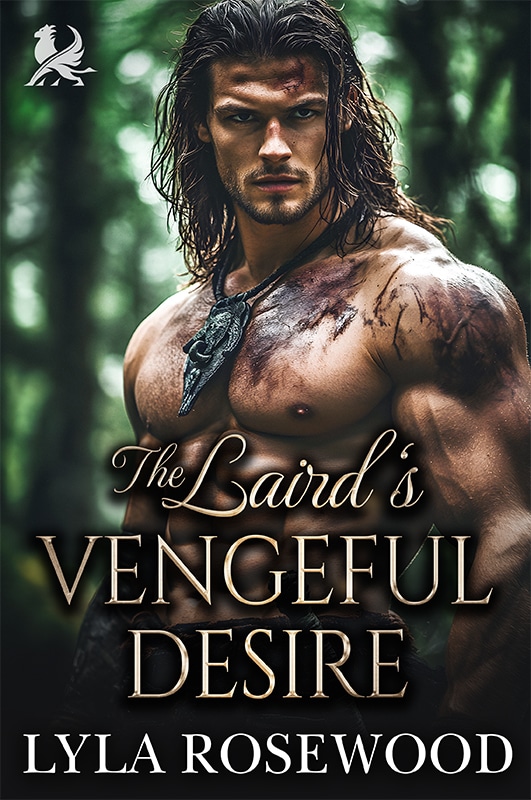
Ian Wallace never wanted to be laird, but with a dying clan to save, he has no time for complications—especially not the fierce, beautiful prisoner hidden in his own new castle. She’s a MacAlpin, born of the blood he’s sworn to hate but the fire in her eyes stirs something deeper than duty. He should send her away. Instead, he’ll risk everything to keep her.
Read the book
★★★★★ 194 ratings
Thora MacLeod always follows her visions, but kidnapping Laird Aedan Cameron and blackmailing him into a fake marriage at a dangerous Yule gathering? Not her best idea. As sparks fly in enemy territory, their feelings for one another start to complicate things. Thora knows that her visions might save their clans, but they won’t stop her heart from shattering once Aedan finds out she’s been lying to him all along…
Read the book
0 Comments